F 7#9 on Bass (5-String)
Root first, then the colors: every F 7#9 tone placed on the BEADG neck, ready to walk.
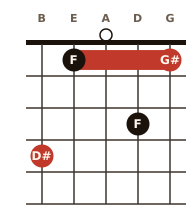
F 7#9 spells F – G# – A – C – D#. A bassline treats those notes as a hierarchy — root first for gravity, fifth for stability, then the third and any extensions for color — and the shapes below put each of them under your fingers on the Bass (5-String)'s BEADG strings.
Full chords are optional equipment on bass: down low, stacked thirds turn to mud, so the grips that work keep two or three notes — root-fifth, root-tenth, shell voicings — and the arpeggio is how the rest of the chord becomes a line. The 5-string layout adds a low B to the standard EADG core, so the same shapes reach further without shifting.
Start from the root, play the arpeggio until the sound of F 7#9 is in your ears, then loop it against the progressions in F so the tones become choices instead of charts.